Overview
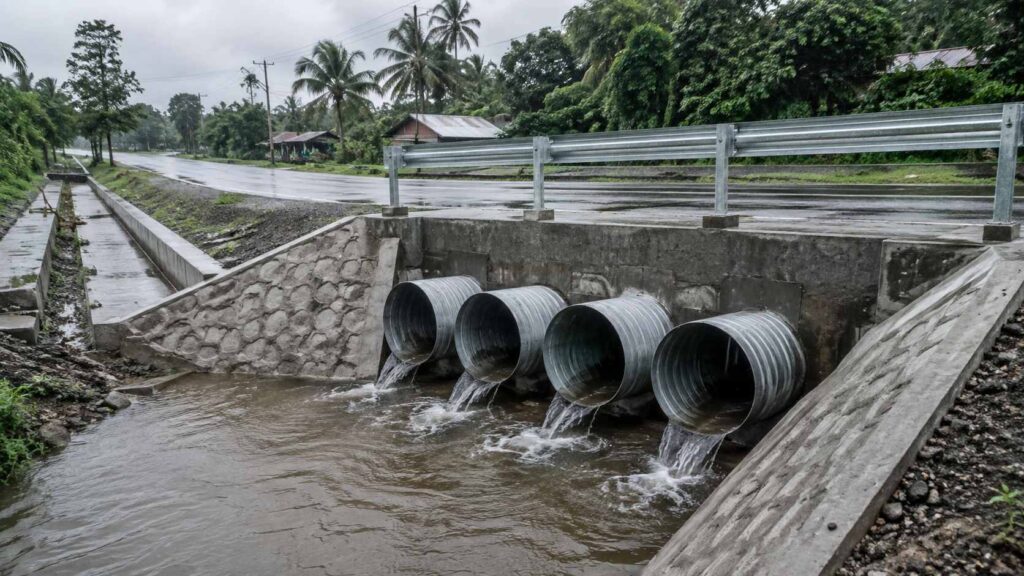
- Flood-prone and high-moisture environments expose piping systems to conditions that can accelerate corrosion and reduce service life.
- Galvanized iron pipes use a bonded zinc coating that protects the underlying steel and continues to provide protection even when the surface experiences minor scratches.
- For construction project managers and procurement officers, pipe selection should account for coating quality, wall thickness, site exposure, installation conditions, and applicable project standards.
- Properly specified galvanized iron pipes can provide a practical balance of corrosion resistance, structural strength, availability, and lifecycle value for drainage, water control, and other infrastructure applications.
Flooding creates more than a temporary water-management problem. Repeated exposure to standing water, saturated soil, debris, and high humidity can gradually damage piping systems and increase the risk of corrosion, leakage, and premature replacement.
This explains why galvanized iron pipes are ideal for flood-prone areas. Their zinc coating helps protect the steel beneath from moisture-related corrosion while preserving the strength needed for many construction and infrastructure applications.
For construction project managers, the right pipe can support longer service life and fewer maintenance disruptions. For procurement officers, galvanized iron pipes offer a familiar and widely available material that can be evaluated through coating quality, dimensional consistency, supporting documentation, and compliance with project specifications.
What Makes Galvanized Iron Pipes Resistant to Corrosion in Flood-Prone Areas?
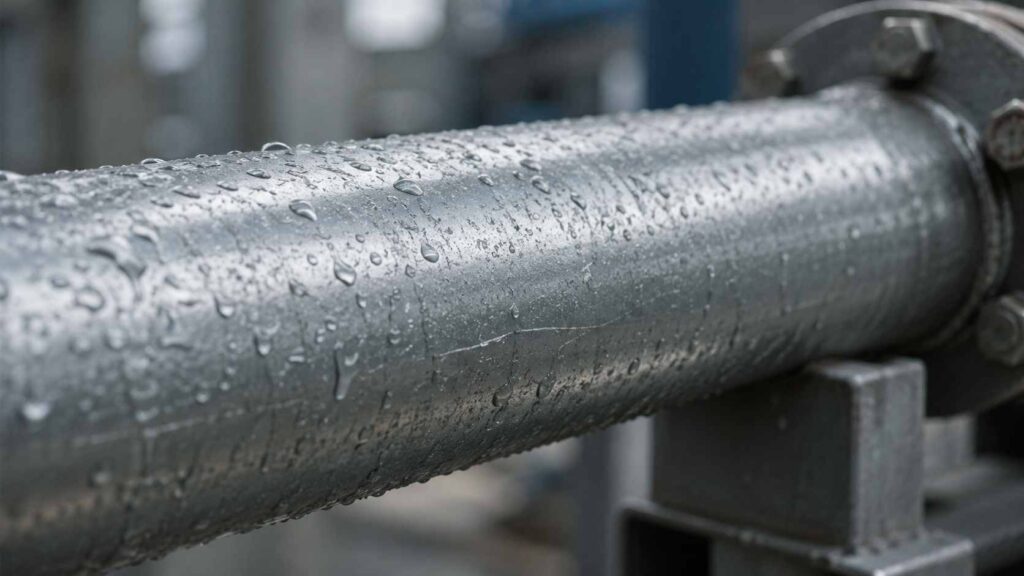
Galvanized iron pipes receive their corrosion resistance from a protective zinc coating bonded to the steel surface. This coating acts as both a physical barrier and a sacrificial layer.
When moisture reaches the pipe, the zinc reacts before the underlying steel. This process helps slow the development of rust and protects exposed areas caused by minor scratches or surface damage, provided enough zinc remains around the affected section.
This form of protection is especially valuable in flood-prone areas, where pipes may experience repeated wet and dry cycles, intermittent submersion, saturated soil, and high humidity.
Sacrificial Zinc Protection Helps Protect Exposed Steel
The zinc coating does more than separate the steel from water. It corrodes preferentially, helping protect nearby steel when small areas of the coating are damaged.
This gives galvanized iron pipes an advantage over uncoated steel pipes in environments where transportation, installation, flood debris, or site activity may cause minor surface abrasion.
However, the zinc layer is not unlimited. Its long-term performance still depends on coating thickness, water chemistry, installation quality, and the severity of exposure.
A Protective Patina Can Slow Further Corrosion
When zinc is exposed to air and moisture, it can develop a stable surface layer commonly referred to as a patina. This layer helps slow the rate at which the remaining zinc is consumed.
Intermittent flooding can allow this protective layer to form as water recedes and the pipe is exposed to air. This contributes to the predictable corrosion performance that makes galvanized iron pipes suitable for many high-moisture environments.
Conditions involving aggressive chemicals, highly acidic water, or salt exposure may accelerate coating deterioration. Project teams should therefore assess the actual site environment rather than assume that one pipe specification is suitable for every flood zone.
How Does Zinc Coating Support Long-Term Durability?
The durability of galvanized iron pipes depends heavily on the quality and uniformity of the zinc coating.
During hot-dip galvanizing, the steel is coated with bonded zinc and zinc-iron alloy layers. These layers are integrated with the steel surface rather than applied as a loosely attached finish, which helps reduce the risk of peeling or delamination under normal service conditions.
Coating Thickness Influences Service Life
A heavier and more uniform zinc coating generally provides a greater reserve of corrosion protection. As the zinc is gradually consumed, the time before the steel substrate becomes exposed depends partly on the amount of coating available.
For flood-prone and high-humidity applications, procurement teams should avoid evaluating galvanized pipes based on price alone. They should also review:
- Zinc coating requirements
- Coating uniformity
- Pipe wall thickness
- Product dimensions
- Manufacturer test reports
- Project and engineering specifications
These checks help identify weak or inconsistent coatings that may lead to premature corrosion.
Coating Uniformity Reduces Weak Points
Uneven zinc distribution can create vulnerable sections where corrosion begins earlier than expected. This is particularly important in buried, wet, or intermittently submerged installations, where visual inspection may become difficult after construction is complete.
Suppliers should be able to provide relevant technical documentation or test information that supports product consistency. Clear documentation gives project managers and procurement officers greater confidence before materials reach the site.
Which Galvanized Iron Pipe Specifications Matter in Flood Zones?
Selecting a galvanized iron pipe for a flood-prone area requires more than choosing a nominal diameter. The pipe must also suit the expected load, installation depth, water exposure, flow requirement, and maintenance conditions.
Wall Thickness
Wall thickness affects the pipe’s ability to withstand handling, installation stress, internal pressure, soil movement, and external loads. A thicker pipe may be required for buried installations, road crossings, deeper trenches, or areas exposed to vehicle loads. The final specification should follow the project drawings and engineering calculations rather than a general assumption that one schedule is suitable for every application.
Pipe Diameter and Water Volume
Drainage and water-control systems must carry the expected volume of runoff without restricting flow or creating unnecessary pressure. Pipe diameter should be based on rainfall intensity, catchment area, site grading, discharge conditions, and hydraulic design. Even a corrosion-resistant pipe can perform poorly if it is undersized for the required flow.
Zinc Coating Quality
The zinc coating should be consistent across the pipe surface and appropriate for the expected moisture exposure. Project teams should inspect the product condition upon delivery and review supplier documentation for coating and dimensional requirements. Damage caused during transportation, cutting, threading, or installation should also be repaired using a suitable zinc-rich protective system where required.
Applicable Standards and Project Specifications
Galvanized iron pipes should be selected according to the standards, drawings, and technical requirements identified for the project. Supreme Pipe manufactures galvanized steel pipe solutions for construction and infrastructure applications in accordance with recognized specifications. Procurement teams should confirm the required pipe type, finish, dimensions, coating, and documentation before placing an order.
Why Do Project Managers Choose Galvanized Iron Pipes for Flood-Prone Applications?
Galvanized iron pipes offer a practical combination of corrosion resistance, mechanical strength, local availability, and familiar installation methods. These qualities help reduce uncertainty during procurement and construction, especially for projects that require dependable materials without the higher cost associated with more specialized corrosion-resistant metals.
Stronger Moisture Protection Than Uncoated Steel
Black iron and other uncoated steel pipes can corrode more quickly when regularly exposed to moisture unless additional protective systems are applied. Galvanized iron pipes already include a zinc layer that helps protect the steel surface. This makes them a practical option for applications where humidity, intermittent flooding, or wet soil are expected.
Familiar Installation and Fittings
Galvanized iron pipes are familiar to many construction teams and are compatible with commonly available fittings and installation tools. This familiarity can simplify installation planning, reduce training requirements, and make replacement components easier to source.
Crews must still take care not to damage the coating during cutting, threading, handling, or joining.
Practical Lifecycle Value
The lowest-priced pipe is not always the most economical over the full life of a project. When correctly specified and installed, galvanized iron pipes may reduce the frequency of corrosion-related repairs and replacements compared with untreated steel in wet environments.
Procurement officers should compare total value rather than initial material price alone, including product quality, expected service conditions, documentation, installation requirements, maintenance, and supplier support.
Where Can Galvanized Iron Pipes Be Used in Flood-Prone Areas?
Depending on the project design and applicable requirements, galvanized iron pipes may support:
- Site drainage and runoff conveyance
- Water-control systems
- Utility lines in high-humidity locations
- Exposed piping subject to frequent moisture
- Selected buried applications with suitable protection
- Commercial and industrial infrastructure systems
- Flood-mitigation and civil works projects
The correct application depends on the pipe specification and the actual site conditions. Galvanized iron pipes should not be treated as a universal solution for every drainage or water system. Their suitability must be confirmed against engineering requirements, water chemistry, soil conditions, and intended use.
What Should Procurement Officers Check Before Ordering?
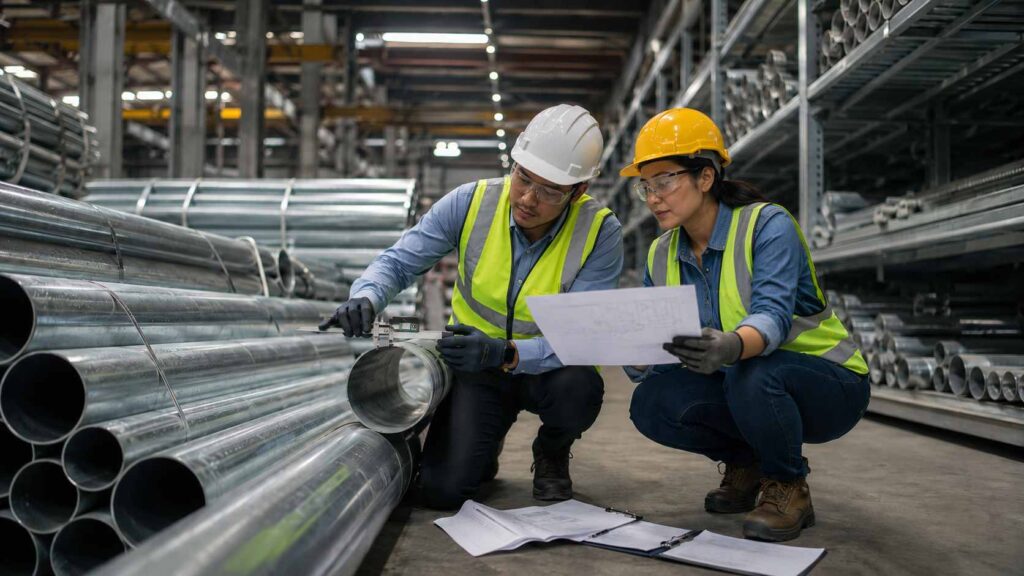
Before purchasing galvanized iron pipes for a flood-prone project, confirm:
- Required diameter and wall thickness
- Expected water volume and operating conditions
- Exposure to standing water, wet soil, chemicals, or salt
- Zinc coating quality and uniformity
- Applicable standards and project drawings
- Product test reports and supporting documentation
- Delivery schedule and available quantities
- Handling, storage, and installation requirements
- Supplier experience and technical support
These checks help reduce the risk of receiving pipes that do not match the project’s environmental or structural requirements.
Work With Supreme Pipe for Galvanized Iron Pipe Requirements
At Supreme Steel Pipe Corporation, we manufacture steel pipe solutions for construction, water-control, utility, and infrastructure applications across the Philippines.
We help project managers and procurement teams source galvanized iron pipes according to required sizes, finishes, standards, and delivery schedules. Our focus is to provide consistent product quality, dependable documentation, and practical support throughout the procurement process.
Key Takeaway
Galvanized iron pipes are ideal for flood-prone areas because they combine zinc-based corrosion protection with the structural strength of steel. However, long-term performance still depends on proper specification. Before procurement, project teams should assess coating quality, wall thickness, pipe diameter, site exposure, installation requirements, and supporting technical documentation.
For galvanized iron pipes suited to high-moisture, drainage, and infrastructure applications, contact Supreme Steel Pipe Corporation to discuss your project requirements and material specifications.
Share this blog