Overview
- Drainage and water control systems are essential in Philippine construction because heavy rainfall, poor runoff management, and clogged waterways can quickly damage roads, foundations, utilities, and surrounding properties.
- Steel pipes support these systems by providing strong water conveyance for runoff and stormwater, structural durability for buried or exposed installations, large-diameter options for civil infrastructure projects, and reliable support for flood control, drainage, and water distribution
- For contractors, the goal is not just to install pipes. The goal is to choose a pipe that can handle site conditions, water volume, load requirements, and maintenance expectations.
Flooding remains a practical concern for many construction sites and completed developments in the Philippines. Even when drainage plans are well-designed, the wrong pipe material or size can limit water flow, increase maintenance issues, and expose nearby infrastructure to unnecessary risk.
This is why steel pipe applications matter in drainage and water control systems. Steel pipes are used where strength, flow reliability, and long-term performance are important. Supreme Pipe’s civil infrastructure steel pipe applications cover drainage networks, flood control structures, water distribution systems, and public works projects, making them relevant for contractors managing site drainage, roadworks, and infrastructure protection.
Why Drainage and Water Control Systems Need Reliable Pipes
A drainage system is only as dependable as the materials that carry the water. If pipes deform, corrode too quickly, leak, or clog easily, the system can fail during the exact moment it is needed most.
Government flood mitigation work shows how important drainage capacity is. In June 2026, DPWH-NCR cleared over 7,500 cubic meters of drainage inlets and desilted more than 70,000 cubic meters of waterways to help improve floodwater recession in Metro Manila.
For project managers and foremen, this reinforces one point: drainage is not an afterthought. It is part of infrastructure protection. Pipe selection should account for rainfall intensity, site grading, soil movement, expected load, debris exposure, and long-term maintenance access.
Key Steel Pipe Applications in Drainage and Water Control Systems
Storm Drainage and Runoff Conveyance
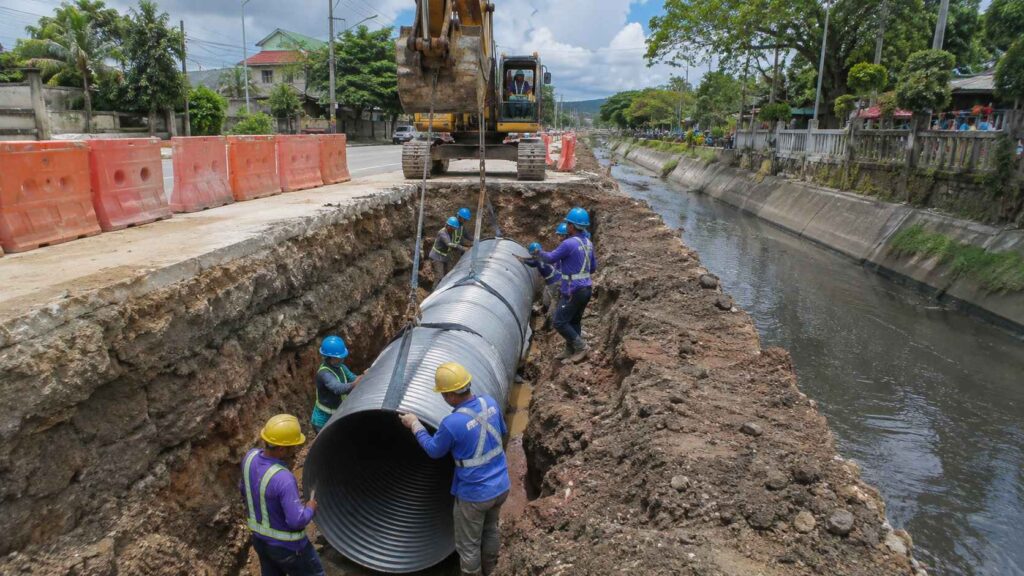
Steel pipes help direct stormwater away from roads, buildings, open lots, and work areas. In site development, they can be used to move runoff toward canals, detention areas, or discharge points. For flood-prone locations, GI pipes in flood-prone drainage systems are especially relevant because galvanized iron pipes are designed to resist corrosion and support water flow under harsh conditions.
Culverts and Road Crossings
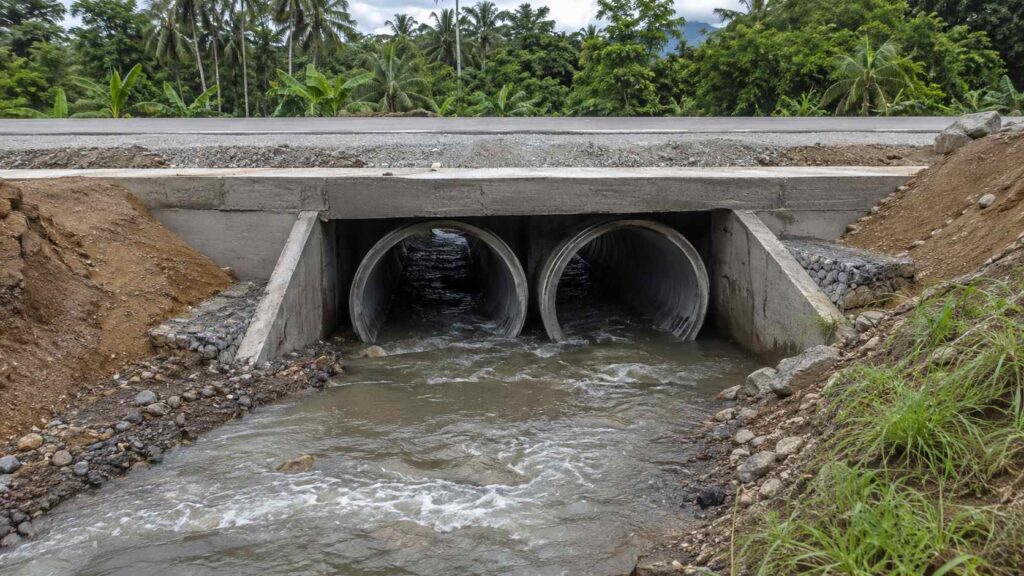
Culverts allow water to pass under roads, access points, and embankments without washing out the structure above. Steel pipes are useful in these applications because they can provide strength under soil pressure, traffic loads, and continuous water exposure. This makes them important for roadworks, subdivisions, industrial access roads, and public infrastructure projects.
Flood Control and Water Diversion
Steel pipes can support flood control systems by moving excess water away from vulnerable areas. In larger projects, contractors may need pipes that can support higher volume, longer runs, or larger diameters. Supreme Pipe’s SSAW steel pipes are designed for large-diameter pipeline systems and water transmission, with available coatings such as epoxy resin, polyurethane, coal tar anticorrosive paint, cement lining, and black varnish.
Water Distribution and Utility Support
Drainage and water control are also connected to water distribution and utility planning. Steel pipes may be used in systems that require dependable water movement for commercial, industrial, or infrastructure use. For large water transmission projects, AWWA C200 provides minimum requirements for steel water pipes 6 inches and larger, including materials, fabrication, workmanship, and testing.
Why Steel Pipes Are Valuable for Contractors
Steel pipes are valuable because they offer strength, dimensional reliability, and application flexibility. Supreme Pipe’s heavy gauge steel pipes are ERW-manufactured and used for construction, water supply, industrial systems, and fire protection. They are available in BI and GI finishes and follow standards such as PNS 26:2018 and ASTM A53.
This matters on site because drainage and water control systems often face more than water flow. They also deal with ground pressure, construction activity, debris, vibration, and changing weather. Contractors should match pipe type, coating, wall thickness, diameter, and standard compliance to the actual project requirement.
Different drainage and water control requirements may call for different pipe types, so it helps to understand the types of steel pipes and their applications before finalizing materials for a project.
What Contractors Should Check Before Selecting Steel Pipes
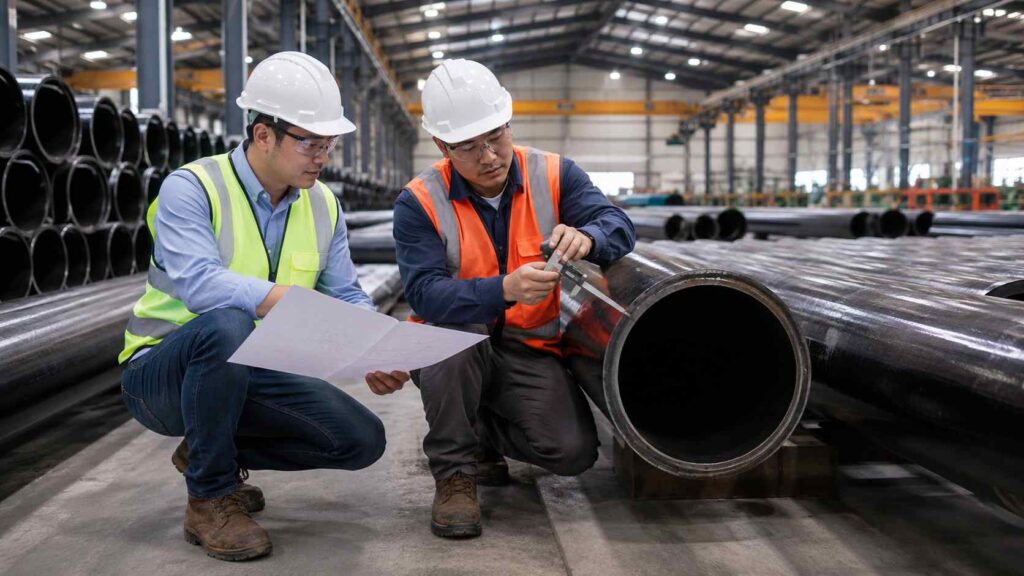
Before ordering steel pipes for drainage or water control, check the following:
- Required pipe diameter and expected water volume
- Site exposure to floodwater, soil movement, and corrosion
- Load conditions from vehicles, soil cover, or nearby structures
- Required standards, specifications, and project drawings
- Coating or lining needs for buried, wet, or corrosive environments
- Supplier availability, delivery schedule, and size consistency
Standards should also be reviewed early, especially when project specifications require compliance with local pipe quality requirements. Understanding PNS standards for pipes can help contractors check for safety, compatibility, and long-term performance before procurement begins.
What This Means for Your Project
Steel pipes play an important role in drainage and water control systems because they help manage runoff, protect infrastructure, and support long-term flood mitigation. For construction project managers, contractors, and foremen, choosing the right steel pipe can make a major difference in system performance, maintenance needs, and project durability.
Key Takeaway
The importance of steel pipe applications in drainage and water control systems comes down to strength, flow reliability, and infrastructure protection. The right pipe helps water move safely and efficiently before flooding becomes a bigger project risk.
Need steel pipes for drainage, water control, or civil infrastructure work? Contact Supreme Steel Pipe Corporation to discuss your project requirements, pipe sizes, standards, and delivery needs.
Share this blog