Key Considerations When Choosing Light Gauge Pipes for Wet Areas
- Choose Galvanized Iron for Moisture-Exposed Areas
- Match the Pipe to the Actual Application
- Check PNS Compliance and Product Standards
- Evaluate Coating Quality and Surface Condition
- Confirm Wall Thickness Against Moisture and Load Conditions
- Plan Transport, Storage, and Handling Before Delivery
- Work With a Supplier That Provides Clear Documentation
Overview
- Selecting light gauge pipes for moisture-exposed areas requires more than comparing pipe size and price. Procurement teams need to check coating, wall thickness, pipe standards, and storage conditions before placing an order.
- Galvanized iron light gauge pipes can be useful for plumbing, light structural, and general fabrication work in humid or wet environments, provided the application does not require heavier wall thickness or higher pressure capacity.
- Working with a supplier that provides clear documentation, consistent quality, and proper delivery support helps reduce procurement risks before pipes reach the project site.
High-moisture environments are common in Philippine construction. Plumbing areas, outdoor utility runs, service zones, coastal locations, flood-prone work sites, and poorly ventilated storage areas can all expose pipes to moisture, humidity, and repeated wet-dry conditions.
For procurement officers and plumbing contractors, choosing light gauge pipes should not be based on availability alone. A pipe may be easy to handle and cost-efficient, but it still has to match the project’s exposure level, installation method, and performance requirements.
Understanding the ways to choose light gauge pipes for high-moisture environments helps buyers avoid materials that may work in dry conditions but become harder to maintain once moisture, handling damage, or poor storage affects the pipe. Read on to learn the practical checks that should guide your selection.
Why Moisture Conditions Affect Light Gauge Pipe Selection
Moisture can shorten the service life of poorly specified steel pipes. Rain exposure, condensation, standing water, and humid air can increase the risk of corrosion, surface damage, and material deterioration if the pipe finish is not suited for the environment.
This is especially important for light gauge steel pipes, which are designed for lightweight and cost-efficient applications. Their thinner wall thickness makes them easier to handle, transport, and install, but it also means the pipe must be matched carefully to the application.
For wet or moisture-prone areas, procurement teams should think beyond the pipe’s starting price. They should evaluate how the coating, wall thickness, storage plan, and supplier documentation will affect performance after installation.
What to Check When Choosing Light Gauge Pipes for High-Moisture Areas
Choosing the right pipe for a high-moisture environment means checking how the material will behave before, during, and after installation. These seven considerations can help procurement officers and plumbing contractors make better purchasing decisions.
Choose Galvanized Iron for Moisture-Exposed Areas
For humid, wet, or outdoor areas, galvanized iron pipes are usually the better choice compared to black iron pipes. The zinc coating helps protect the underlying steel from moisture exposure, making GI pipes more suitable for locations where corrosion risk is a concern.
This is especially useful for plumbing-related work, outdoor runs, utility support, and areas exposed to intermittent water contact. Reviewing how galvanized iron pipes perform in flood-prone areas can help project teams understand why coating quality, wall thickness, and site exposure should be checked together.
Match the Pipe to the Actual Application
Light gauge pipes are not automatically suitable for every wet area. They are best considered for applications where reduced wall thickness, easier handling, and cost efficiency are appropriate.
Common uses may include plumbing systems, light structural frameworks, general fabrication, and selected industrial applications. For systems exposed to heavy loads, high pressure, or critical infrastructure requirements, contractors should confirm if a heavier pipe specification is needed instead.
Check PNS Compliance and Product Standards
Standards help confirm whether the pipe meets expected requirements for dimensions, wall thickness, manufacturing quality, and material consistency. This matters in high-moisture environments because weak or inconsistent materials become harder to correct once the system is already installed.
For Philippine projects, reviewing PNS standards for pipes helps buyers understand why pipe requirements should be checked before procurement begins. The product standards reference also helps buyers compare details such as outside diameter, inside diameter, wall thickness, applicable standards, and zinc coating notes.
Evaluate Coating Quality and Surface Condition
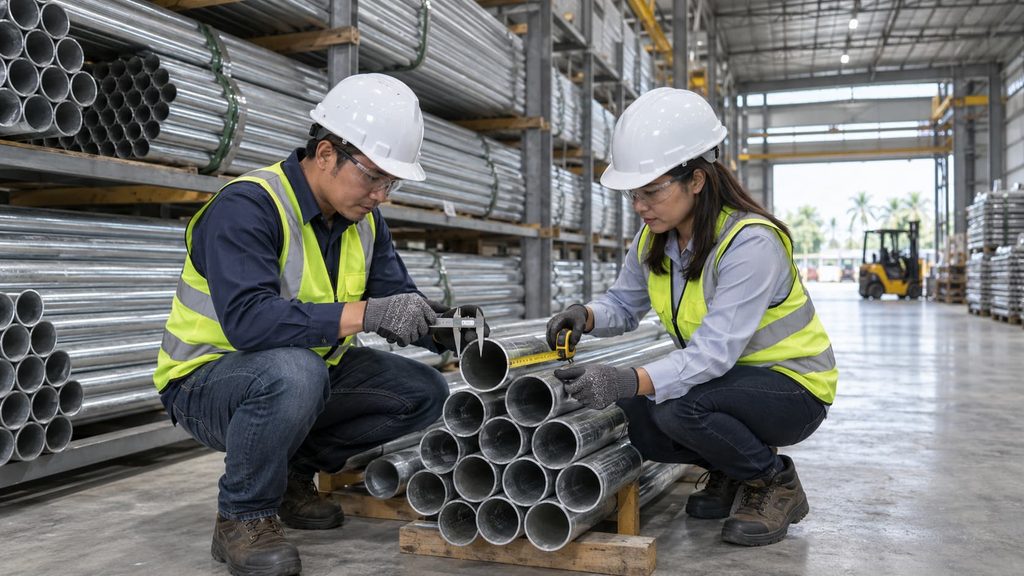
In moisture-exposed areas, the coating is one of the most important checks. Procurement teams should inspect for smooth galvanization, consistent surface finish, exposed steel, dents, rust spots, uneven coating, or signs of poor handling.
These checks should be done before materials are accepted at the site. A practical review of what to check before finalizing a galvanized pipe purchase can help buyers evaluate coating quality, physical condition, documentation, compatibility, and transport concerns before approving the order.
Confirm Wall Thickness Against Moisture and Load Conditions
Light gauge pipes have thinner walls than heavy gauge pipes, which makes them easier to move and install. However, wall thickness still affects strength, stability, and long-term performance.
Before ordering, buyers should compare the pipe’s wall thickness with the installation area, pressure requirement, support spacing, expected handling stress, and moisture exposure. A pipe used in a protected indoor area may not need the same specification as one installed in a wet service zone, exposed run, or flood-prone location.
Plan Transport, Storage, and Handling Before Delivery
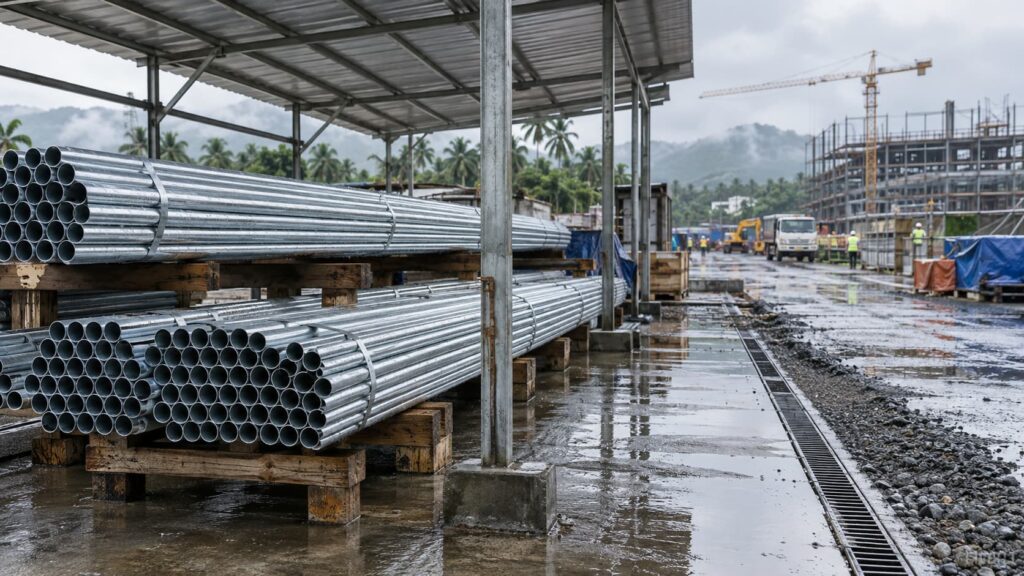
A properly manufactured pipe can still develop surface issues if it is poorly handled or stored before installation. This is a common risk during rainy periods, when pipes may be delivered to wet sites or stacked in areas with limited airflow.
To reduce this risk, pipes should be stored off the ground, protected from standing water, spaced for ventilation, and arranged so rainwater can drain. Procurement officers should also coordinate with the site team before delivery to make sure the storage area is ready.
Work With a Supplier That Provides Clear Documentation
High-moisture projects leave little room for vague specifications. Procurement officers and plumbing contractors should request clear information on pipe size, finish, wall thickness, applicable standard, coating, stock availability, and delivery schedule.
For cost-efficient BI and GI options, Tri-R light gauge pipes are designed for light gauge applications across construction, industrial, and utility systems. Choosing a supplier with available product data and proper documentation helps reduce procurement risk before materials reach the site.
Common Mistakes to Avoid When Buying Light Gauge Pipes for Wet Areas
Avoiding common procurement errors helps ensure that light gauge pipes can support the project’s moisture, handling, and performance requirements.
- Choosing black iron pipes for wet or humid areas without checking corrosion protection needs.
- Selecting pipes based only on price without reviewing coating, wall thickness, and application fit.
- Accepting pipe deliveries without inspecting coating condition, surface damage, or dimensional consistency.
- Skipping supplier documentation such as standards compliance, product specifications, or test records.
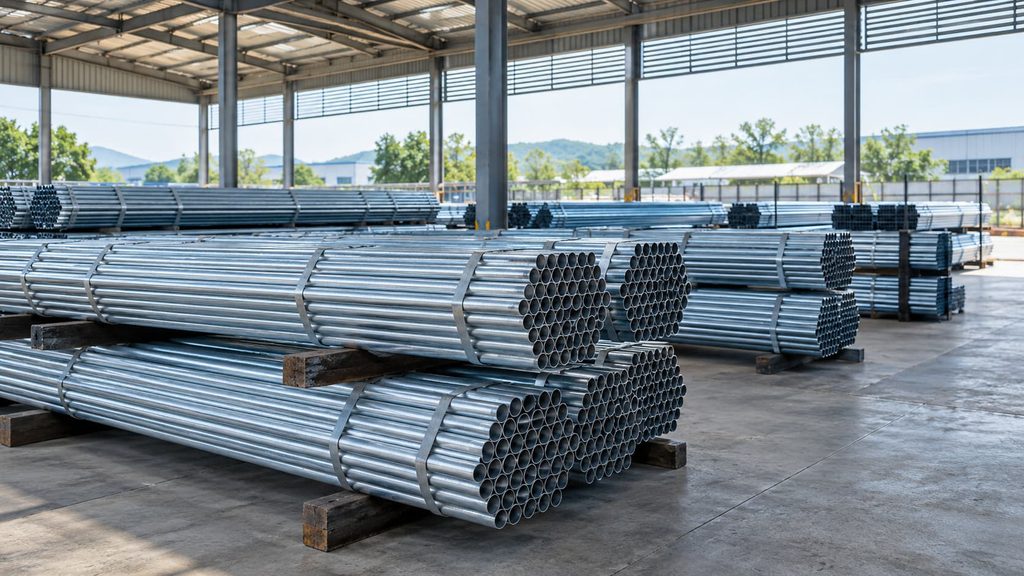
- Storing pipes directly on wet ground or in stacked conditions where water cannot drain properly.
These issues can lead to early corrosion, installation difficulties, rejected materials, rework, or higher maintenance costs. Taking time to compare specifications and supplier support helps buyers avoid these problems before they affect the project.
When comparing galvanized options, following best practices for comparing galvanized pipes before purchase can also help procurement teams check technical specifications, supplier reliability, and long-term value instead of focusing only on the lowest quote.
What This Means for Your Project
Choosing light gauge pipes for high-moisture environments requires balancing cost, handling efficiency, corrosion resistance, and application suitability. A galvanized light gauge pipe may be practical for plumbing, light structural, or general fabrication work, but only when the pipe matches the project’s pressure, load, and exposure conditions.
For procurement officers and plumbing contractors, the safest approach is to confirm the finish, coating quality, wall thickness, standards, storage plan, and supplier documentation before ordering. This helps keep the project moving while reducing the risk of moisture-related pipe issues later on.
Key Takeaway
The best ways to choose light gauge pipes for high-moisture environments come down to proper matching. Buyers should select the right finish, confirm wall thickness, inspect coating quality, review standards, prepare storage, and work with a supplier that can provide reliable documentation and consistent support.
At Supreme Steel Pipe Corporation, we manufacture light gauge BI and GI pipe solutions for construction, plumbing, fabrication, and industrial applications across the Philippines. Contact us today to discuss your required pipe sizes, finishes, standards, quantities, and delivery schedule.
Share this blog